For agencies
One sign-in for every client you run.
One sign-in, every brand you were invited to
Client A's organization
You: Admin- Client A
Client B's organization
You: Member- Client B US
- Client B UK
Your agency's organization
You: Owner- House brand
Illustrative names. Roles are set per organization.
Growth Dept runs paid media for ecommerce brands, and MTA is the attribution we built for that work. Report every client on numbers they can check against their own store. Each client keeps its own data and invites your team in.
 Shopify
 Meta
 Google Ads
 TikTok
 YouTube
 Instagram
 Snapchat
 Pinterest
 Microsoft Advertising
 Amazon Ads
 AppLovin
 Reddit
 LinkedIn
 X
 The Trade Desk
 Vibe
 MNTN


 OpenAI Ads
 Klaviyo
Access
Clients own their data and invite you in.
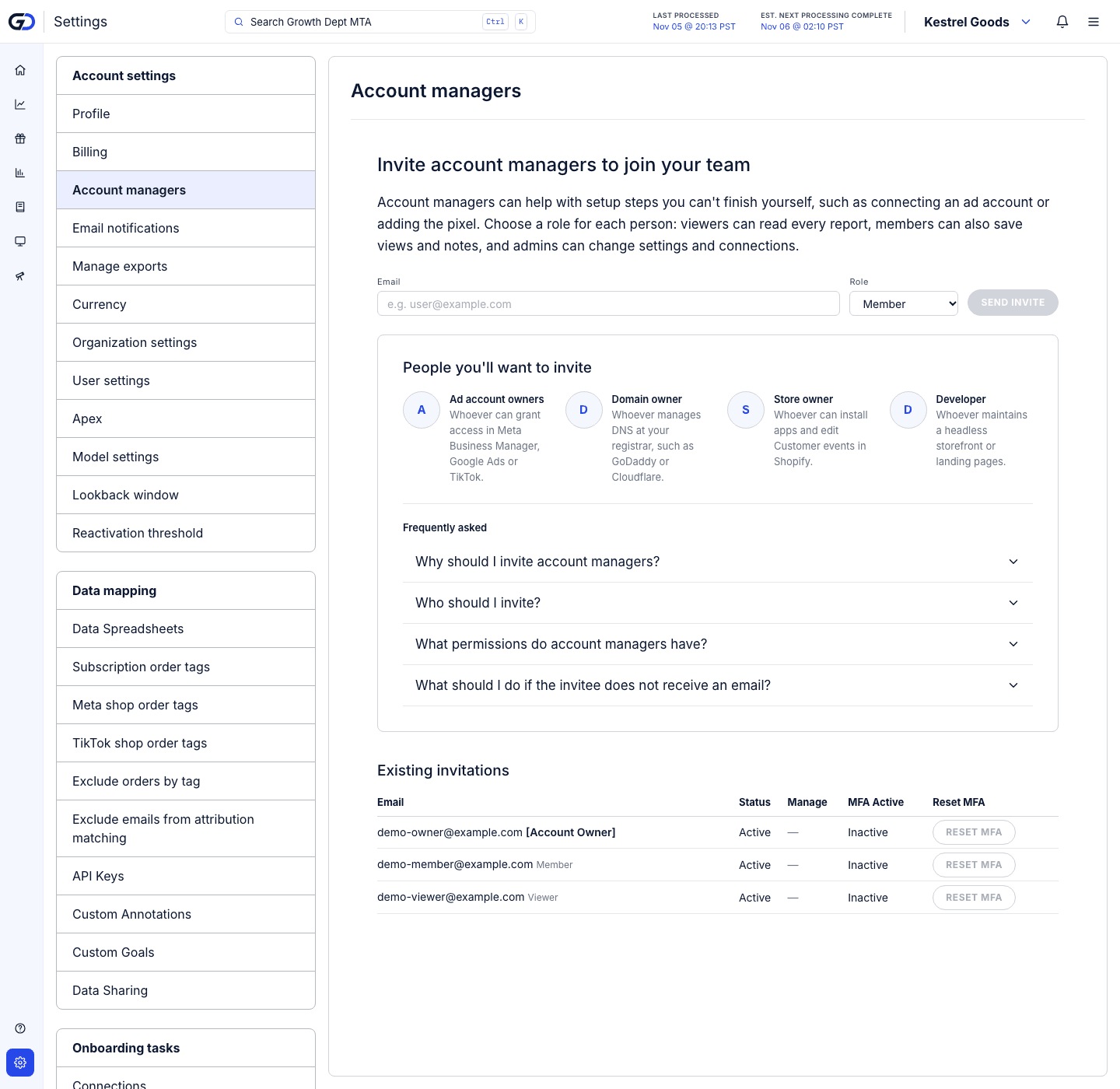
Each client has its own account. Its team sees only its own brands, and your team sees every client that invited you, switching between them from the top bar.
Roles are set per client: owner, admin, member or viewer. Invites are single-use links that expire after seven days.
Reporting
Send clients numbers they can check.
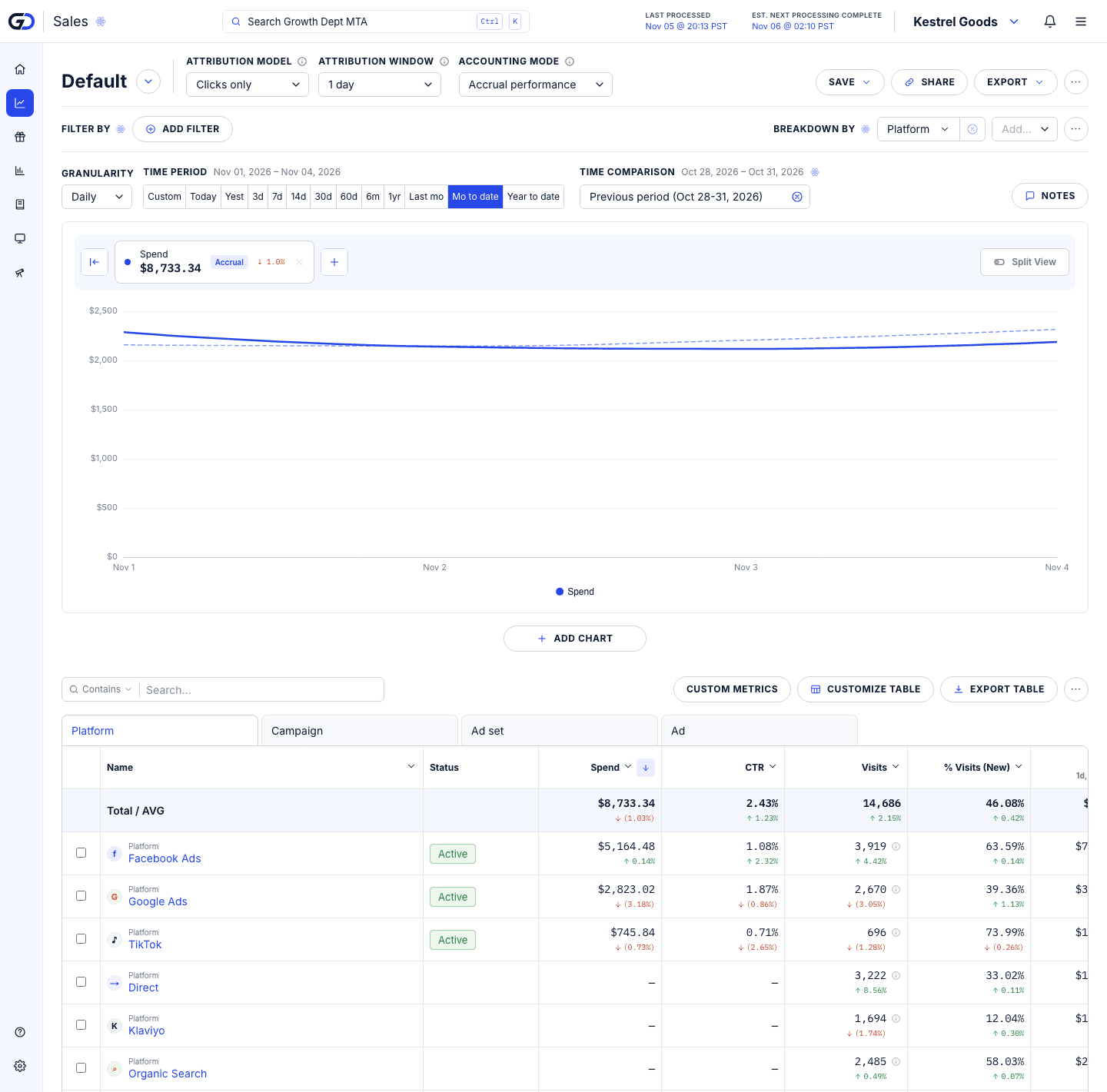
Save a view and share its link, export a table, or give the client's analyst an API key that can only read exports.
Cash snapshot adds up to what Shopify recorded, so the revenue in your report matches the client's own store.
One set of rules
The same definitions for every client.
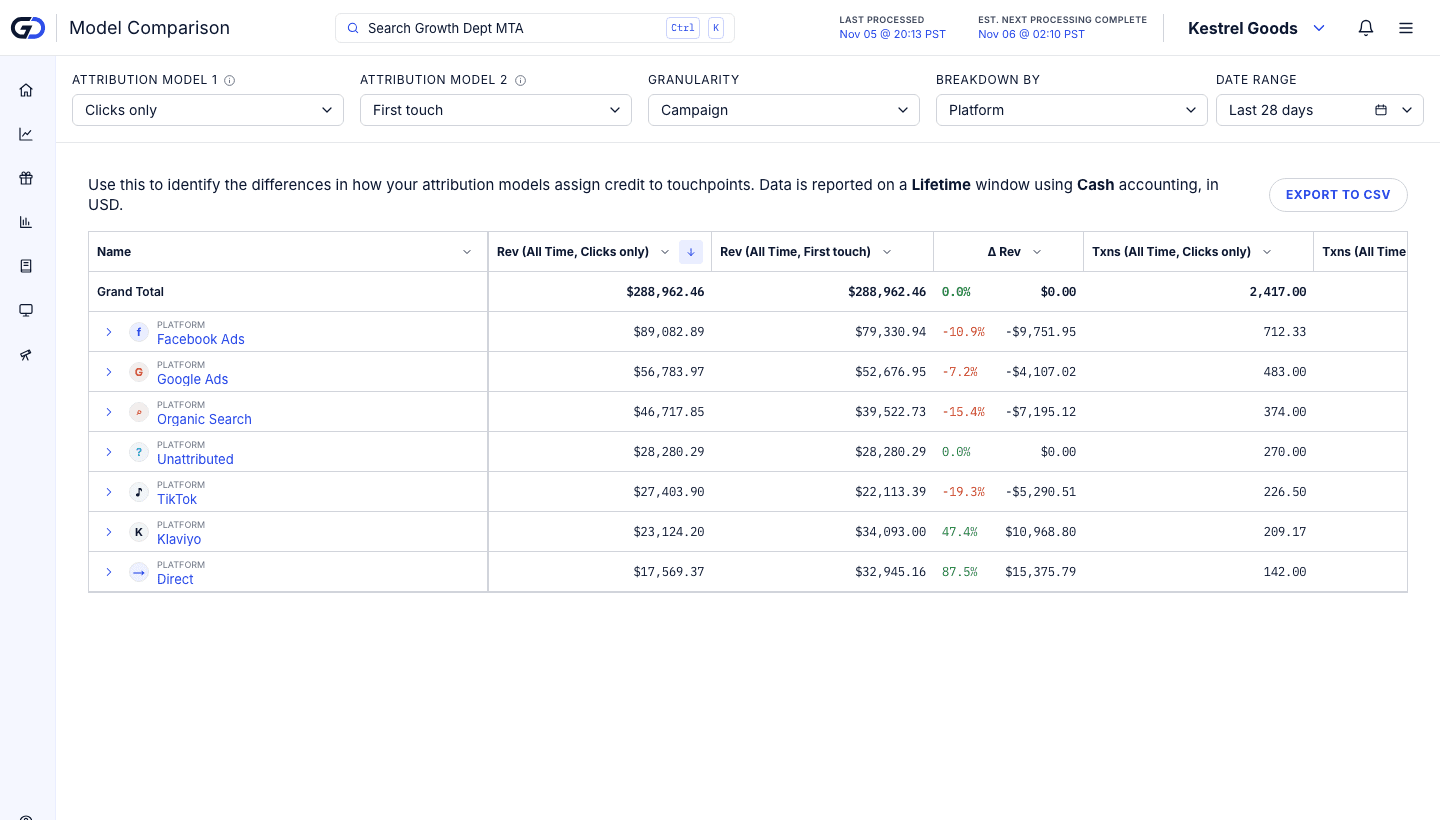
Every brand runs on the same models and windows, so a 7-day ROAS means the same thing for each client you report on.
A client with its own way of counting can keep its own custom metrics and groupings.
Kept apart
Client data stays with the client.
Walled off in the database
The database itself limits every request to one brand, and the app has no way to switch that off. One client's numbers never show in another's report.Keys for one brand
An API key belongs to one brand. Used with another brand's ID, it is refused.Changes on the record
Every change to accounts, brands, access and keys is written to an audit log.
Ask it
Answers to the questions you ask every week.
Each card opens the report that answers it.
Which campaigns brought in new customers last week, and what did each one cost?
New-customer revenue, orders and cost per new customer for every platform, campaign, ad set and ad.
Sales attributionOpen itWhich ads claim more sales in the platform than they actually drove?
Each ad shows the platform's own reported revenue beside the revenue your orders credit to it.
Creative analyticsOpen itWould this campaign still look good if we judged it differently?
See the same channels and dates under every attribution model, side by side.
Model comparisonOpen itCan we put these numbers next to the rest of our data?
Pull any report as CSV files into your own warehouse, on your schedule.
Export APIOpen itWhat is a customer we won in January worth by day 90?
Group customers by the month of their first order and follow what they spend, out to two years.
Customer LTVOpen itIs our Meta spend lifting branded search?
Put Meta spend beside Google brand-search revenue and see how closely the two move together.
Metrics explorerOpen it
Numbers that add up.
Three rules every report keeps, checked by automated tests on every change.
1×
Each sale counted once
However many platforms claim an order, its revenue is split across the touches that led to it and never counted twice.
= Shopify
Totals match your store
Orders with no tracked ad get their own Unattributed row, so changing the model moves credit between rows and never changes the total.
1 currency
Spend and revenue in yours
Spend billed in another currency is converted once, at that day's European Central Bank rate, so ROAS never mixes two currencies.
Run MTA across your client brands.
Book a 45-minute call with the Growth Dept team. We walk through how your clients would connect and what it would cost.